

Rim Joist Insulation in Grand Rapids, MI: The Ultimate Guide to a Dryer, Warmer Home
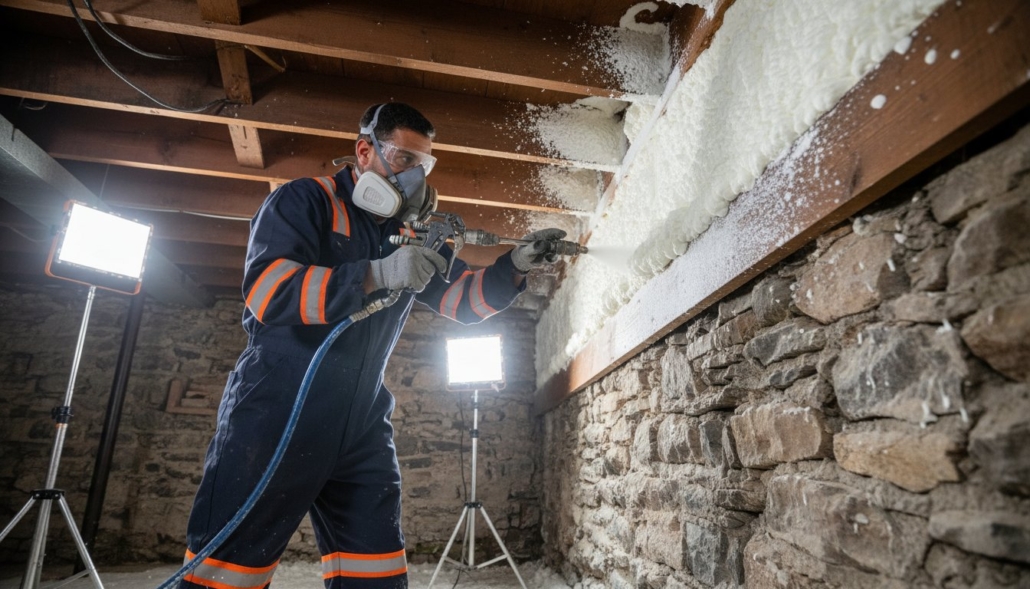
Last January, a homeowner in East Grand Rapids watched their Consumers Energy bill climb toward $400 while the floors in their living room stayed a frigid 56 degrees. You probably know that feeling of wearing thick wool socks inside just to stay comfortable. It’s a common struggle across West Michigan, where the gap between your foundation and your walls acts like an open window for the winter wind. Properly installed rim joist insulation is the professional solution that seals these critical air leaks, turning a drafty house into a high-performance home.
Our team at Third Coast Spray Foam understands that you want a home that’s both efficient and healthy. We’ll show you exactly how sealing the thermal envelope can slash your heating costs by up to 15% and stop the musty smells rising from your crawl space. This guide covers everything from preventing basement condensation to choosing the right R-value for our unique climate, giving you the peace of mind that your investment will last for decades. We’re here to help you improve your total home health starting from the ground up.
Key Takeaways
- Identify why the rim joist is the primary source of air leaks and cold floors in West Michigan homes.
- Understand how proper sealing manages the Michigan dew point to protect your home’s structure from moisture and rot.
- Learn why closed-cell spray foam is the only effective solution for rim joist insulation to stop the “filter effect” of traditional fiberglass.
- Explore our professional installation approach to sealing your home’s envelope for maximum durability and thermal efficiency.
- Discover how this single upgrade slashes monthly utility costs while providing immediate comfort and long-term peace of mind.
What is a Rim Joist and Why is it the Leakiest Part of Your Grand Rapids Home?
Every Grand Rapids homeowner knows the bite of a Michigan winter. You feel it in your utility bills and in the cold drafts that seem to crawl across your floorboards. The culprit is often hidden from view in your basement or crawl space. The rim joist is the critical junction where the foundation meets the frame. Also known as the box sill, this component forms the perimeter of your floor system, sitting directly on top of your foundation wall. To understand your home’s energy efficiency, you must first understand What is a Rim Joist and how its structural position makes it a primary source of air infiltration.
This area is notoriously difficult to seal with traditional building methods. Because wood and concrete expand and contract at different rates, gaps are inevitable. A gap of just 1/16th of an inch around the perimeter of an average 2,000 square foot home can leak as much air as a five inch hole in your wall. In our West Michigan climate, where temperatures drop to an average of 18 degrees in January, these small cracks become major liabilities. Frigid air pours through these openings, cooling your floors and forcing your furnace to run 20% longer than necessary to maintain comfort.
The physics of a Michigan home relies on the “Stack Effect.” As you heat your home, that warm air rises and escapes through the attic. This creates a vacuum in the lower levels of the house, which actively pulls cold outdoor air in through the rim joist. This isn’t just a passive leak; it’s a mechanical suction that makes the rim joist the most vulnerable part of your thermal envelope. Without professional rim joist insulation, your home acts like a chimney, constantly pulling in cold air from the base and exhausting heat out the top.
Identifying the Rim Joist in Your Basement or Crawl Space
You can find the rim joist by looking at the very top of your basement wall where the wood framing begins. It’s the board that runs perpendicular to your floor joists, capping them off. In older Grand Rapids neighborhoods like Heritage Hill or the West Side, where 38% of homes were built before 1940, these areas often have zero sealing. You can spot air leaks by looking for cobwebs or dark dust streaks. Spiders build webs here because they thrive on the constant airflow, while dust streaks act as a natural filter, showing you exactly where the air bypasses your walls. If you see daylight at the corners, you’re losing money every hour.
The “Leaky Bucket” Metaphor for Home Energy
Think of your home’s heating system as a bucket you’re trying to fill with water. If the bucket has holes at the bottom, it doesn’t matter how fast you turn on the faucet; you’ll never keep it full. An uninsulated rim joist is exactly like leaving a window cracked in every room of your house all winter long. By prioritizing rim joist insulation, you’re plugging the most significant leaks at the base of your home. This targeted approach provides the highest ROI in the insulation industry, often reducing annual heating costs by 15% to 20%. Sealing this specific junction is the most pragmatic step toward a permanent, energy-efficient home environment.
The Science of Sealing: Why Michigan Winters Demand Better Rim Joist Insulation
The physics of a Michigan winter are unforgiving for any home with an unsealed foundation. In Grand Rapids, where January temperatures frequently plummet to 10°F or lower, the rim joist becomes a thermal bridge between the sub-zero outdoors and your 70°F basement. This creates a collision of air temperatures known as the dew point. When warm, moisture-laden indoor air touches the freezing surface of an uninsulated rim joist, it instantly transforms into liquid water. This isn’t just a minor dampness; it’s a constant cycle of “sweating” that occurs every hour your heater is running.
West Michigan homeowners face a unique challenge due to our proximity to Lake Michigan. The lake effect doesn’t just bring snow; it maintains high ambient humidity levels that often exceed 75% during the winter months. This moisture finds its way into your basement, where it condenses against cold wood surfaces. Over a single season, this moisture causes wood fibers to swell and soften. By the third or fourth year of neglect, the structural integrity of your sill plate can begin to compromise. This environment is the primary breeding ground for Stachybotrys and other mold varieties that thrive in the dark, damp pockets of a basement ceiling. Utilizing high-quality rim joist insulation is the only way to move the dew point outside of your home’s structural wood components.
Our team at Third Coast Spray Foam often finds that homeowners attempt to fix this with fiberglass batts. Unfortunately, fiberglass acts like a filter rather than a barrier. It allows air to pass through while trapping moisture against the wood, which actually accelerates rot. The process of properly insulating rim joists requires a material that creates an airtight seal, stopping the condensation cycle before it starts. This isn’t just about saving a few dollars on heat; it’s about protecting the very skeleton of your property.
Winter Challenges in Kent and Ottawa Counties
Residents in Kent and Ottawa counties deal with extreme temperature differentials that can span 60 degrees in a single day. On a typical February night, the frost line can penetrate deep into the soil, causing the concrete foundation to act like a giant ice cube. This extreme cold travels up the foundation wall to the sill plate. We often see actual frost forming on the interior side of unsealed rim joists. During the 25 to 30 freeze-thaw cycles we experience each season, the gap between your foundation and the wood framing expands and contracts, breaking down old caulk and allowing even more icy air to infiltrate the home.
Total Home Health and Indoor Air Quality
We view every house as a holistic system. Because of the “stack effect,” air enters through the basement and exits through the attic. If your rim joists aren’t sealed, you’re breathing air that has been filtered through damp basement corners and soil gaps. This air often carries allergens, dust mites, and even trace amounts of radon gas common in Michigan soils. By sealing the envelope at the foundation level, you stop the upward migration of these contaminants. It’s the first step in a healthy home strategy that prioritizes respiratory health as much as energy efficiency. If you’re concerned about your basement’s air quality, you can request a professional inspection to identify hidden air leaks.

Spray Foam vs. Fiberglass: Why Traditional Batts Fail in West Michigan
Grand Rapids homeowners often find their basements are the coldest rooms in the house. This usually points back to the rim joist. For decades, the standard practice was to stuff pink fiberglass batts into these spaces. It’s a cheap method, but it’s fundamentally flawed for West Michigan’s climate. Fiberglass is a porous material designed to trap pockets of air. While it works inside a dry, sealed wall, it fails at the rim joist because it doesn’t stop air movement.
Air leakage accounts for roughly 40% of a typical home’s heating and cooling costs according to Energy Star data. When you use fiberglass for rim joist insulation, you aren’t sealing the house. You’re just filtering the air. This “filter effect” is why old fiberglass looks gray or black when you pull it out. It’s spent years catching dust and allergens while letting cold Michigan wind blow right through the fibers. This renders the R-value almost useless in drafty conditions because the air simply moves around and through the material.
The Dangers of Fiberglass in Damp Areas
Fiberglass cannot stop vapor or moisture. In the Great Lakes region, summer humidity levels often stay above 60%. When warm, humid air hits a cold rim joist, it turns into liquid water. Fiberglass absorbs this moisture like a sponge and holds it against your rim joist and sill plate. This leads to wood rot and mold growth that can compromise your home’s air quality. Within 5 to 10 years, the weight of the moisture and gravity causes the batts to sag, leaving the top of the joist bay completely uninsulated. For comprehensive moisture protection throughout your home, implementing a proper vapor barrier system is essential to prevent these damaging effects.
Why Closed-Cell Spray Foam is the Gold Standard
Closed-cell spray foam is the only product that addresses every challenge of the rim joist. It offers a high R-value of 6.5 to 7.0 per inch, but its real power is the air seal. As we apply the foam, it expands into every 1/16 inch crack where the wood meets the foundation. This creates a monolithic vapor barrier that stops condensation before it starts. It’s a permanent solution that won’t require maintenance or replacement.
Our team at Third Coast prefers closed-cell foam because it adds structural rigidity to the floor system. Studies show that closed-cell foam can increase the racking strength of a wall by up to 300%. It won’t settle, shrink, or lose its shape over time. This is a “one and done” investment for your home’s total health. You get a permanent seal that keeps the Michigan winter outside where it belongs. By sealing the envelope at the foundation level, we ensure that your rim joist insulation provides the comfort and energy savings you actually paid for.
- Total Air Seal: Stops drafts that fiberglass ignores.
- Vapor Barrier: Prevents wood rot by stopping condensation.
- Structural Strength: Hardens to reinforce the floor joists.
- Longevity: Maintains performance for the life of the structure.
The Professional Installation Process: Sealing Your Home’s Envelope
Third Coast Spray Foam treats every rim joist as a critical junction in your home’s thermal envelope. Our process begins with a 360-degree inspection of every joist pocket to identify existing wood rot or pest activity. If we find moisture levels exceeding 19% in the rim board, we pause to address the source before proceeding. We don’t just spray over problems; we solve them. This ensures the 2.0-pound density closed-cell spray foam adheres perfectly to a clean, stable substrate. Once the area is prepped, we apply the foam with surgical precision to create a monolithic seal. This stops the 30% of energy loss typically attributed to air leakage in Michigan basements. We also ensure the sill plate, where the wood framing meets the concrete foundation, is fully encapsulated to block pests and moisture.
What to Expect During Your Installation Day
For a standard 1,500-square-foot Grand Rapids basement, the installation typically takes between 4 and 6 hours from start to finish. Safety is our primary concern during this window. We utilize high-volume exhaust fans to exchange the air in your basement 10 times per hour throughout the application process. We ask that residents and pets remain out of the immediate area for 24 hours to allow for full off-gassing and curing. Our team protects your belongings by draping everything in 6-mil poly sheeting to prevent overspray. You can expect a clean workspace when we leave. We treat your home like it’s our own, ensuring that the only evidence of our visit is a warmer floor and lower energy bills.
Addressing Penetrations and Utilities
A truly effective rim joist insulation project requires more than just filling the large bays. We pay special attention to “the penetrations,” which are the holes drilled for dryer vents, outdoor spigots, and electrical conduits. These small gaps often leak as much air as a window left open an inch. We seal these gaps to create a continuous air barrier across the entire perimeter. By integrating the sill plate, the rim joist, and the subfloor above into one airtight system, we eliminate the drafts that make your living room floors feel like ice during a West Michigan winter. This level of detail is what separates a professional application from a temporary DIY fix.
The final phase involves a rigorous quality check. We verify that the foam has reached its full R-7 per inch depth and that the chemical reaction has completed properly. Every bay is inspected for consistency. A professional Third Coast finish means no gaps, no mess, and no lingering odors. We remove all protective coverings and debris, leaving your basement better than we found it. This meticulous attention to detail is why we’re the preferred choice for rim joist insulation in Kent County. We take pride in delivering results that you can feel the moment you walk across your hardwood floors.
Long-Term Benefits and ROI for Grand Rapids Homeowners
Upgrading your rim joist insulation delivers immediate financial relief that shows up on your next Consumers Energy or DTE bill. When we seal the thermal envelope at this critical junction, your HVAC system stops fighting a losing battle against the West Michigan wind. Most homeowners see a 15% reduction in monthly heating and cooling costs immediately after installation. This is not just a seasonal fix. It is a permanent barrier that protects your home’s mechanical systems from overworking, which extends the lifespan of your furnace and air conditioner.
Beyond the ledger, the physical comfort of your home changes overnight. We often hear clients complain about “cold floor” syndrome, where the first floor feels like an ice box even when the thermostat is set to 70 degrees. This happens because uninsulated rim joists allow cold air to pull heat right out of your floorboards. By creating an airtight seal with spray foam, we eliminate those drafts. Your feet stay warm, and your living space maintains a consistent temperature from the floor to the ceiling.
The financial incentives extend into your tax returns through the 2026 Energy Efficient Home Improvement Credit. Under Section 25C of the Internal Revenue Code, Grand Rapids residents can claim a federal tax credit of 30% for professional energy upgrades. This credit is capped at $1,200 annually for weatherization measures like insulation and air sealing. When you combine these federal savings with the long-term increase in property value, the project pays for itself. Modern buyers look for energy-efficient homes with documented upgrades, making professional insulation a high-yield investment for your home’s equity.
Calculating Your Savings in West Michigan
In a typical Grand Rapids home, the rim joist area accounts for roughly 20% of total air leakage. Because spray foam provides both a high R-value and a superior air seal, it is the most efficient material for this space. Most of our clients find that their investment in spray foam pays for itself in energy savings within 3 to 5 years. You should also check for local rebates. Consumers Energy and DTE frequently offer cash-back incentives for air sealing and basement insulation projects that meet specific efficiency standards.
Choosing a Local Expert in Fruitport and Grand Rapids
Michigan building codes, specifically Part 11 of the Michigan Residential Code, require precise R-values and fire-rated barriers in basement areas. Hiring a local specialist ensures your project is compliant and safe. At Third Coast Spray Foam, we don’t just spray and leave. We focus on total home health by evaluating how rim joist insulation interacts with your basement’s ventilation and moisture levels. We take pride in serving our neighbors with precision and honesty.
Take Control of Your Home’s Thermal Envelope Today
Your property’s comfort and efficiency start at the foundation. Replacing failing fiberglass batts with professional rim joist insulation stops the 15% of residential energy loss that typically escapes through an unsealed basement perimeter. At Third Coast Spray Foam, our team of West Michigan climate specialists understands that a complete air seal is the foundation of total home health. We use expert closed-cell foam application to create a permanent barrier that won’t sag or harbor moisture like traditional materials. This upgrade can reduce annual heating costs by $240 or more while eliminating the cold floors that make Grand Rapids winters feel harsh. We take pride in delivering tangible results that improve your daily living standards and long-term financial well-being. It’s a practical investment in a dryer, more stable environment for your family. Our technicians are ready to help you identify hidden leaks and optimize your home’s performance with precision. Get Your Free Rim Joist Insulation Estimate and take advantage of our free on-site energy audits for Grand Rapids residents. You deserve a home that stays warm and protected all year long.
Frequently Asked Questions
Is it worth insulating rim joists?
Yes, insulating your rim joists is one of the most cost effective upgrades you can make because this area accounts for up to 20% of a home’s total energy loss. By sealing these gaps, you stop the stack effect that pulls cold air into your basement from the outside. Our team at Third Coast Spray Foam often sees homeowners reduce their monthly heating bills by 15% immediately after the installation is complete.
What is the best material for rim joist insulation in Michigan?
Closed-cell spray foam is the superior choice for Michigan homes because it provides a high R-value of 6.5 per inch and acts as a total air seal. Unlike other materials, it doesn’t allow moisture to reach cold wood surfaces during a 10 degree Grand Rapids winter. This creates a permanent thermal envelope that protects your foundation from the extreme temperature swings common in the Great Lakes region.
Can I use fiberglass batts for my rim joist?
You shouldn’t use fiberglass batts because they fail to create an airtight seal, allowing 100% of humid air to pass through to the wood. In Michigan, this leads to condensation and rot within 3 to 5 years. Fiberglass acts like a filter for dust and pests rather than a barrier. For effective rim joist insulation, you need a material that bonds directly to the substrate to prevent air gaps.
How much does professional rim joist insulation cost in Grand Rapids?
Most professional rim joist insulation projects in Grand Rapids range from $1,200 to $2,500 depending on the total linear footage and accessibility. This price typically covers the prep work, premium closed-cell foam, and professional cleanup. While DIY kits exist, our team ensures a 100% seal around every utility penetration. This investment usually pays for itself through energy savings within 4 to 6 years.
Will insulating my rim joists stop my floors from being cold?
Yes, properly sealing the rim joist can increase the temperature of your floors by 5 to 8 degrees during the winter months. Cold air usually leaks through the sill plate and travels under your floorboards, making your home feel drafty even if the thermostat is set to 70 degrees. By sealing the envelope, we keep the heat inside and the West Michigan wind outside where it belongs.
Does spray foam on rim joists prevent mold?
Yes, closed-cell spray foam prevents mold growth by ensuring warm, indoor air never hits the cold wood of your rim joist. When the temperature outside hits 32 degrees, uninsulated wood becomes a magnet for condensation. Our foam application eliminates this moisture source entirely. By maintaining total home health, you protect your structure from the 40% of basement air that eventually circulates into your living spaces.
How long does the spray foam installation take?
A standard rim joist installation for a 1,500 square foot basement takes our team between 3 and 5 hours from setup to finish. We spend the first 60 minutes prepping the area to protect your belongings and mechanical systems. Once the foam is applied, it cures within seconds. You can return to using your basement space immediately after we finish our final safety check and professional cleanup.
Are there tax credits for rim joist insulation in 2026?
Yes, under the federal guidelines extending through 2032, homeowners can claim a 30% tax credit on the cost of insulation materials. This credit is capped at $1,200 annually for weatherization upgrades. We provide the necessary documentation and manufacturer certificates so you can claim these savings on your 2026 tax return. It’s a smart way to reduce the net cost of your energy efficiency project while improving your home.
Disclaimer
Information provided is for general educational purposes. Individual needs and circumstances vary. Speak to an experienced professional before relying on the information given here.







Leave a Reply
Want to join the discussion?Feel free to contribute!